
Return of the "Glassholes"
Why Smart Glasses History Keeps Repeating - only more elegantly
In April 2013, the Google Glass Explorer Edition was released. For $1,500, a select group of developers and early adopters accessed technology that seemed almost science fiction: a display above the right eye, a built-in camera, bone-conduction audio, and voice control via "OK Glass". The vision was ambitious – glasses that navigate, translate, and capture everyday life without needing to operate a phone. (BBC News, January 2015; Time, January 2015)
The Problem Wasn't Just the Camera
That same year, businesses in San Francisco began explicitly banning Google Glass – primarily out of concern that guests could be filmed without notice. Restaurants, bars, theaters, and casinos followed suit. Inspired by journalist Adrian Chen, the term "Glasshole" emerged. He wrote on Gawker in March 2013: "People who wear Google Glass in public are assholes" – people who demand social interaction "on [their] wholly weird and unsettling terms." The term went viral, spreading across Reddit and Facebook into mainstream media coverage. (MIT Technology Review, March 2013; ABC News, January 2015)
But where did the real problem lie? It wasn't just about the camera. It was the invisibility of recording. With a phone, you can see when someone raises it. With a conventional camera, you can spot the lens. With Google Glass, however, it remained unclear whether the person opposite you was filming or not. Mark Hurst captured the issue perfectly: "The most important Google Glass experience is not the user experience – it's the experience of everyone else." (creativegood.com, February 2013)
Google responded at the time with a new ethics policy and a visible recording LED, but the reputational damage had already been done. On January 19, 2015, the Explorer program was discontinued. A consumer version was never released. (BBC News, January 2015)
This wasn't a societal rejection of technology. It was a rejection of being recorded without consent. And that's exactly where things picked up again, cleverly.
Ray-Ban Meta Smart Glasses Enter the Scene
Now comes Meta. About ten years later, the company brought the Ray-Ban Meta to market. Significantly more inconspicuous – no bulky display bar above the eye, but instead the classic Wayfarer design. What's inside, however, is far more powerful: a 3-megapixel camera, 5 microphones, speakers, and an integrated AI assistant.
The marketing hit the mark: by 2025, over 7 million units had already been sold – according to EssilorLuxottica, the conglomerate behind Ray-Ban among others. (heise.de, February 2026)
This was followed by an even more extensive image campaign. They hired influencer Kylie Jenner as their brand ambassador and launched a dedicated model line without Ray-Ban branding in June 2026. Naturally, not without an exclusive Kylie Jenner edition – sparkling with details like a small gemstone on the lens and an adjustable nose bridge. The clear message: smart glasses are not threatening – they're en vogue. (Barron's, July 2026; Meta, June 2026; MediaPost, June 2026)
Marketing Meets Reality
Despite the massive marketing push, reality has long caught up with the brand. They're now called "pervert glasses" – today's equivalent of the "Glasshole." According to reports, some early buyers leave their glasses at home out of fear of stigmatization. Danielle, a commercial user, told Engadget: "A lot of men and their behaviors have ruined this product." (Futurism, 2026; GadgetReview via Yahoo Tech, 2026)
The cultural scene is reacting. At a festival in Madrid in July 2026, musician Lorde interrupted her concert and explicitly spoke out against AI glasses: "You don't know if someone is wearing sunglasses, or if they're wearing those fucked-up AI glasses." A sponsor of the event: Ray-Ban. (TechCrunch, July 2026)
That the concerns aren't merely theoretical is demonstrated by a case in Cologne: Over four weeks, the Claudius Therme reported two suspected incidents of people allegedly being secretly filmed with camera-equipped smart glasses. The spa subsequently imposed a ban on glasses with cameras. Other Cologne facilities followed suit. (WDR, June 2026)
In parallel, professional services offered to physically remove the recording LEDs from the glasses to turn them into pure covert cameras. In July 2026, Meta released a mandatory firmware update that automatically deactivates the camera when the LED is tampered with or destroyed. At the same time, Meta removed corresponding listings from Facebook Marketplace and announced legal action against providers of such modifications. (The Verge, July 2026; Fortune, July 2026; Road to VR, July 2026)
In the United States, a class-action lawsuit was filed against Meta and Luxottica in March 2026. Among other allegations, plaintiffs accuse the companies of passing recorded clips to subcontractors without sufficient disclosure. (medialaw.eu, June 2026)
Ethical Problem: Beyond Current Models
The issue extends beyond the current Ray-Ban Meta model line. According to a report by the Financial Times, Meta is working on prototypes codenamed "Aperol" and "Bellini" – glasses capable of continuously recording audio and photos every few seconds to serve the wearer as an AI memory crutch. Why bother remembering where you last put your keys when you can simply ask your glasses? According to the report, no LED signal is planned for this type of recording. (The Verge, July 2026; The Verge, May 2025; Gizmodo, 2026)
And anyone who thought Google had learned from 2015 would be mistaken. At the Galaxy Unpacked event in July 2026, Samsung – in cooperation with Google – presented a new generation of smart glasses. This fall, glasses with cameras, microphones, speakers, and Gemini integration are set to launch in designs by Warby Parker and Gentle Monster. Here too: the LED lights up during recording. If blocked, the camera is supposed to stop functioning. Regarding privacy concerns, Samsung executive Choi stated: "If, because of that, we stop innovation, we don't go anywhere." (techradar.com, July 2026)
Like 2013
The term "Glasshole" was a symptom of society drawing a line – not against technology, but against its reckless application. Today, the same question is back on the table, only less conspicuously. The glasses are smaller, the marketing is more elegant, and the AI far more powerful. But the fundamental problem remains: when recording becomes invisible, the foundation for consent disappears.
What Google seemingly learned in 2013 appears forgotten. What Meta is learning now – through headlines, lawsuits, and various unflattering nicknames – seems to Samsung merely the price to pay in the name of innovation. The corporate response: an LED. An LED that can be tampered with. Not a protective measure – an illusion.
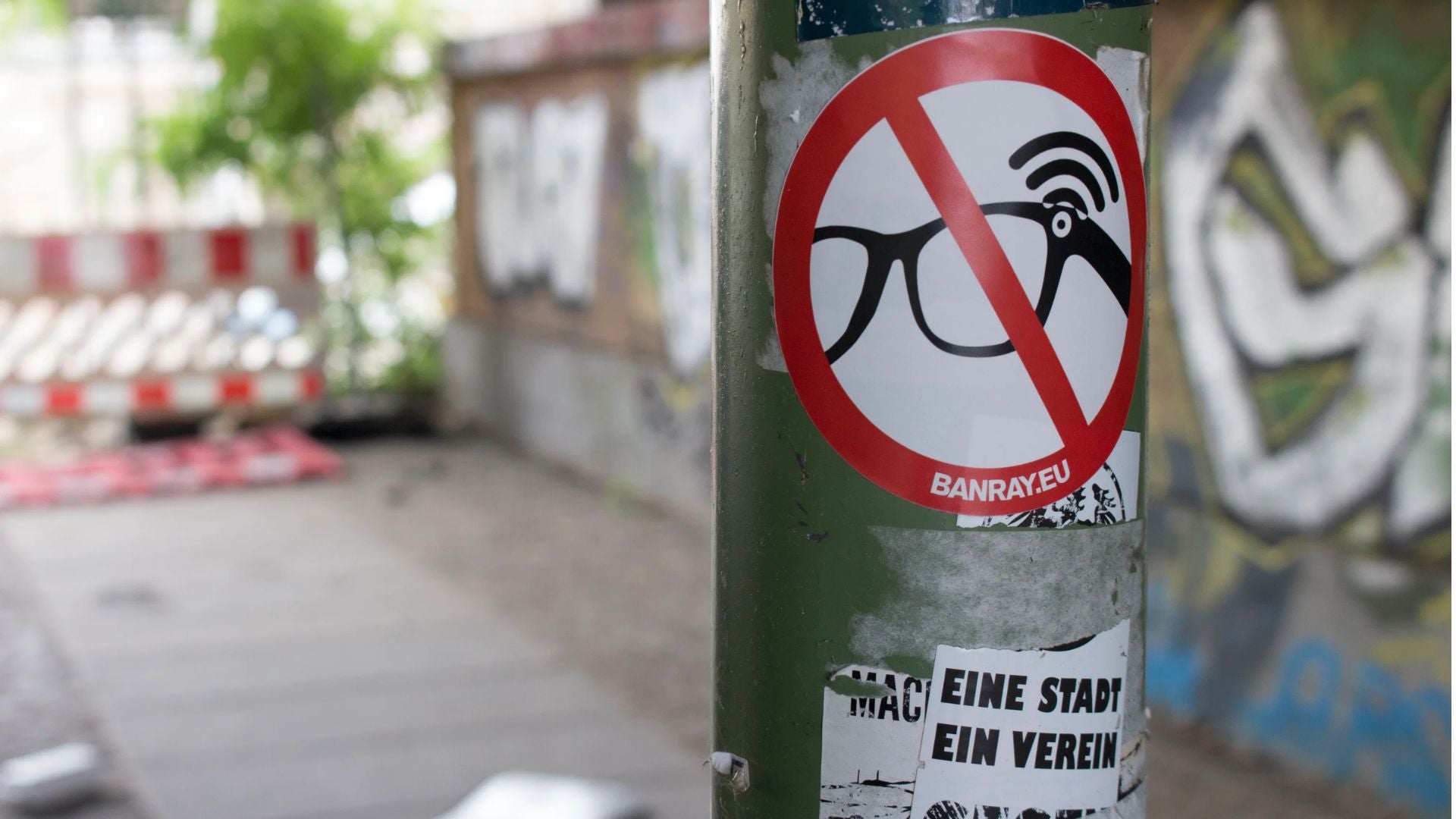
There are ways to protect yourself and take a stand. Technically, the app "Nearby Glasses" helps by scanning via Bluetooth for smart glasses in the vicinity and issuing warnings. On the political front, the initiative banray.eu is campaigning for a ban of the Ray-Ban Meta in the EU and documenting the legal issues – from lack of consent to data export problems.
In the end, it comes down to a simple rule that already applied in 2013: anyone who films without consent crosses the boundaries of others. And back then, those people already had a name:
"Glasshole".






Comments